Roof Snow Shoveling in Bozeman, MT
Roof snow shoveling is weight removal. Not aesthetics, not tidiness — it exists to take load off a structure that is carrying more than it should. On most Bozeman roofs that never becomes necessary. On flat roofs, drift-prone roofs and older or altered structures, it is ordinary winter maintenance.
Roof snow shoveling is also the part of the job people most often try themselves, and the part where doing it yourself goes wrong most expensively — both for the roof and for the person on it.
Roof Snow Shoveling Is About Weight, Not Depth
Depth is a bad measure and it is the one everybody uses. Fresh, light snow runs in the region of 7 pounds per cubic foot. Settled snow, wind-packed snow, and snow that has been through a melt-freeze cycle can run three times that. This is why two feet of old snowpack can be a bigger problem than four feet of fresh powder, and why "we have had less snow this year" is not the reassurance it sounds like.
The City of Bozeman designs to a roof snow load of 41 pounds per square foot inside the city, from a ground snow load of 46 psf. Statewide, Montana sets a floor of 30 psf minimum design roof snow load after allowed reductions. Those numbers describe an evenly loaded roof built and inspected to code — see the roof snow load page for what they do and do not tell you about your particular building.
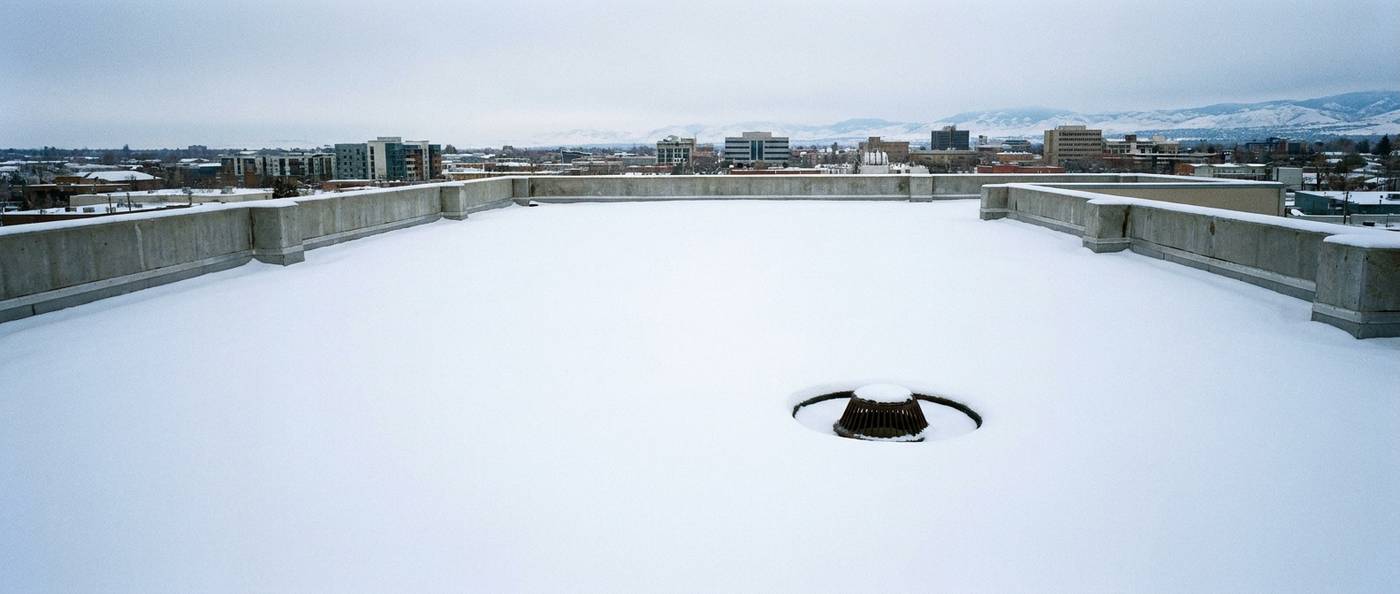
The Roofs That Actually Need Roof Snow Shoveling
Flat and low-slope roofs. Nothing sheds. Snow accumulates for the whole season and the drains and scuppers freeze over at the worst moment. Commercial buildings, modern flat-roofed houses and shed-roof additions all sit in this category.
Drift zones. Wind moves snow and then puts it down somewhere. Behind a dormer, against a parapet, in the lee of a higher wall, in a valley between two roof planes. A drift concentrates several times the even-load figure into one part of the roof, which is precisely the case the design number does not cover.
Lower roofs beneath higher ones. When a steep upper roof sheds, everything it was carrying lands on whatever is below — a garage, a porch, an addition, a mud room. Those lower roofs receive loads they were never designed to see, and they are where structural problems in the Gallatin Valley usually start.
Older and altered structures. Additions framed to an older standard, converted outbuildings, barns and shops, and anything reroofed several times so the deck is carrying more dead weight than it began with.
How Roof Snow Shoveling Is Done Properly
In lifts, from the top down, with the crew roped and anchored. Snow comes off in layers rather than in one excavation, and a protective inch or two is deliberately left on the roofing. Plastic tools rather than steel on membrane and metal. The discharge is directed away from gas meters, vents, walkways, decks and anything living underneath.
It is slower than it looks from the ground, and the slowness is the whole product. A fast job on a roof is a roof repair next summer.
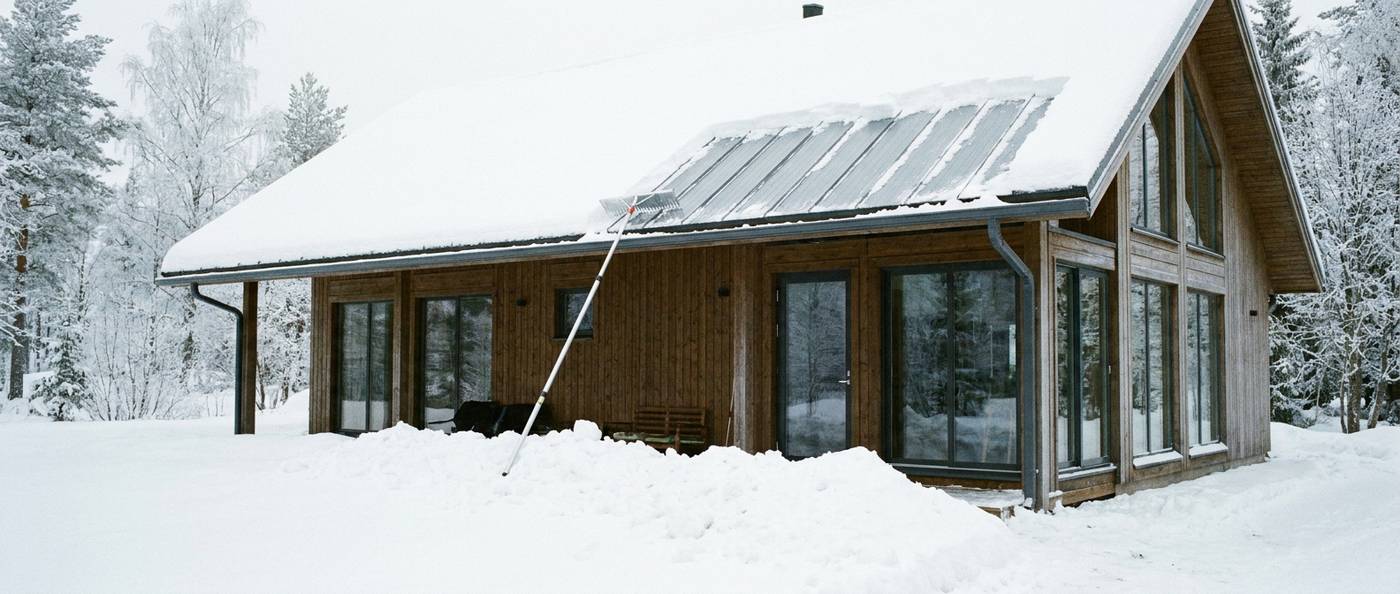
Warning Signs From Inside
The building tells you before the roof does. Interior doors that suddenly stick or will not latch. New cracks in drywall or plaster, particularly above door frames. Creaking or popping under load. A ridge line that has developed a visible dip, or a ceiling that is no longer flat. Sprinkler heads or light fixtures that have shifted relative to the ceiling. Any of those, on a loaded roof, means get the weight off and then find out why.
Why Roof Snow Shoveling Is Not a DIY Job
Because the fall is what hurts. Roof snow shoveling injuries are overwhelmingly falls from height onto frozen ground, and a snow-covered roof gives no warning before it goes. Beyond that, the common self-inflicted damage is a steel shovel through a membrane or a torn standing-seam panel, discovered in April. If the roof is reachable from the ground with a rake, rake it. If it needs somebody on it, that is a job with harnesses and anchors.