Roof Snow Removal for Bozeman Commercial and Managed Properties
If you own or manage a building somebody else lives or works in, roof snow is a liability and structural expense rather than a discretionary one. That is a different decision from a homeowner deciding whether to bother, and it is why commercial and managed properties are a large part of roof snow removal work in Bozeman.
Bozeman's housing stock makes this the town's defining segment. Most housing here is rented rather than owner-occupied, and a large share of it is multi-unit — apartment blocks, student housing near Montana State, condominium associations and the rapid multifamily construction of the last two decades. Behind every one of those roofs is an owner, a board or a manager who carries the consequences of what the snow on it does.
What the Roof Snow Removal Exposure Actually Is
Blocked egress. Snow shed piling against the only usable exit from a unit is a life-safety issue and the first thing an inspector or an insurer will ask about.
Buried vents. High-efficiency furnaces and water heaters vent through side walls and low roofs. Buried under shed snow or drift, combustion gases have nowhere to go but back into the building. On a multi-unit property, that is a great many appliances to keep clear.
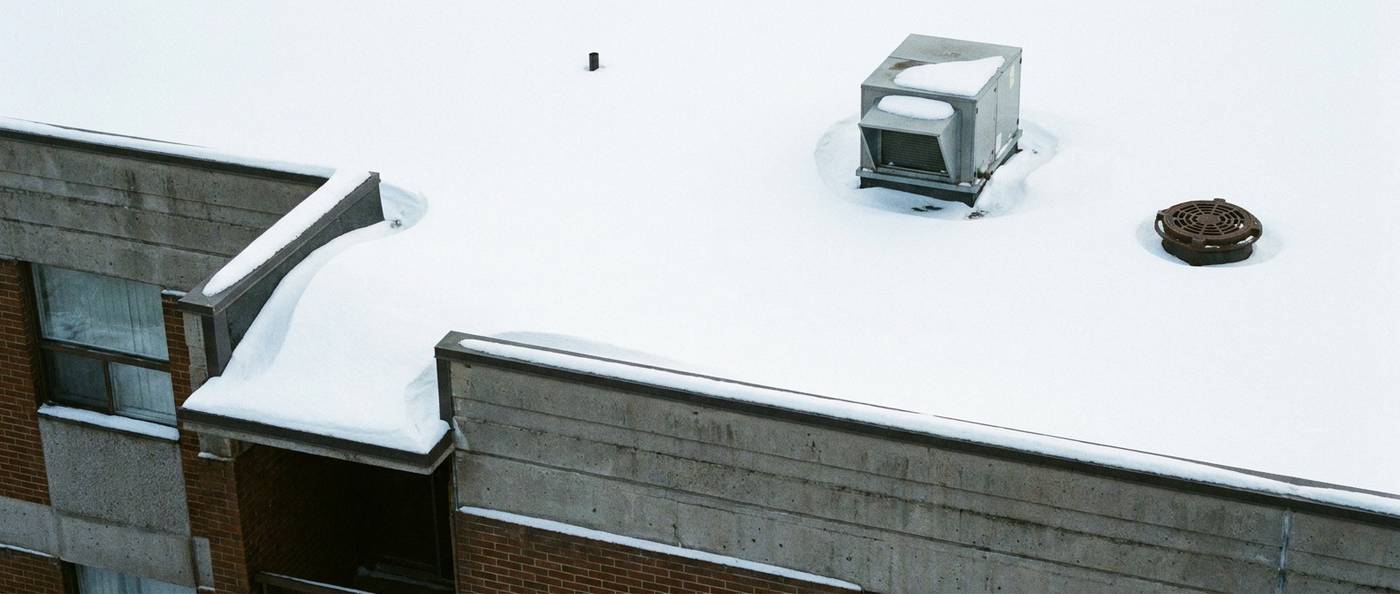
Structural load. Flat and low-slope roofs — which is most commercial and much multifamily construction — do not shed at all. They accumulate from October, and drifting against parapets concentrates load in the corners.
Drainage failure. Roof drains and scuppers ice over precisely when the melt starts, so a flat roof that has been fine all winter can end up ponding water on top of a frozen drain in a February thaw.
Falling ice. Icicles and ice sheets releasing above an entrance or a footpath used by tenants, customers or the public.
How Managed Roof Snow Removal Is Usually Structured
Scheduled clearing. Agreed intervals through the season, or agreed trigger conditions — clear at a given accumulation rather than waiting for somebody to notice.
Storm-triggered response. An agreed order in which buildings get attended after a storm cycle, so the priorities are set in October rather than argued about at 7am on a Monday.
Documented visits. Date, building, what was cleared, photographs. That record is what a board, an owner or an insurer wants when a question comes up later, and it is the single thing most often missing from ad-hoc arrangements.
One point of contact. A manager with eleven buildings does not want eleven separate conversations after every storm.
Roof Snow Removal on Membrane and Flat Roofs
Commercial flat roofs need care that steep residential roofs do not. Membrane is punctured by steel tools, so clearing is done with plastic and a protective layer is deliberately left in place. Drains and scuppers get opened as part of the job rather than as an afterthought, because a cleared roof draining into a frozen drain has not actually solved anything. Rooftop mechanical units, curbs and skylights all have to be worked around rather than over.
Getting Roof Snow Removal Arranged Before the Season
The properties that handle winter well are the ones that arranged roof snow removal in autumn: which roofs get cleared at what trigger, in what order, who to call, and what it costs. The ones that struggle are the ones calling for the first time on the morning after the first big storm, when every crew in the Gallatin Valley is already committed for the week.
If you are responsible for more than one Bozeman roof, the conversation worth having is in September.